Roulette am Mathematikunterrecht
Mat engem Rouletterad kann ee sech d'Warscheinlechkeet einfach virstellen. Hei steet, wéi een et an engem Cours asetzt, ouni zum Glécksspill unzereegen.
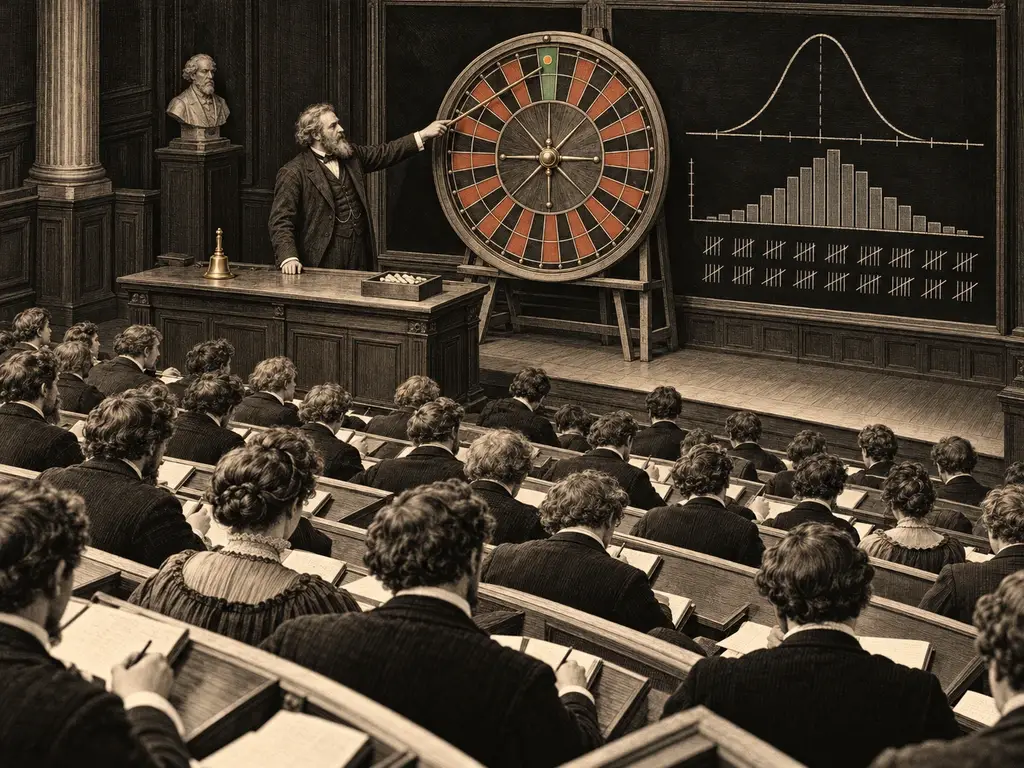
A model with 37 equally likely, independent outcomes connects counting, expectation, varianceMathematikVarianzE Mooss dofir, wéi wäit d'Resultater sech ëm den Erwaardungswäert verdeelen. Héich fir eng Eenzelwett, niddreg fir einfach Chancen.Alles liesen →, repeated events and hypothesis testing. State the assumptions, use simulated outcomes without real stakes, and distinguish a mathematical result from a claim about how students learn.
Firwat Roulette
A fair single-zeroRadNullDat eenzegt gréngt Fach, dat keng einfach Chance, Dosen oder Kolonn ofdeckt; d'Quell vum Hausvirdeel. Och: eenzeg Null, 0.Alles liesen → roulette model offers 37 outcomes and a convenient payoutGeldAuszuelungWat eng gewonne Wett bréngt, uginn als „X zu 1“ zousätzlech zur zréckbezuelter Mise.Alles liesen → formula. It is one example among many: coins, dice and cards can also illustrate probabilityMathematikWarscheinlechkeetD'Chance vun engem Resultat, vun 0 bis 1 oder vun 0% bis 100%. Eng Zuel: 1/37 = 2,70%.Alles liesen →, repeated outcomes and statistical tests. Drawing cards with replacement gives a different model from drawing without replacement.
Uniformity and independence are assumptions to examine, not properties guaranteed by a wheel’s appearance. For a standard bet covering n numbers and paying 36/n − 1 unitsGeldEenheetD'Basismise, mat där e System oder e Spiller rechent. Progressioune ginn an Eenheete beschriwwen, sou datt se un all Dësch gëllen.Alles liesen → of profit on a win, the expected net result per unit staked is −1/37. Special payouts and zero rules change that result.
Eng Rei vu Lektiounen
Dës Beispiller ginn, wann näischt anescht gesot gëtt, vun onofhängegen, gläichverdeelte Resultater op 0–36 aus.
Roulette am Cours, ouni d'Glécksspill bäizebréngen
Keep real money out of the activity. A spreadsheet or a set of numbered tokens can reproduce the mathematics without a casino setting. Choose the framing for the learners and the institution; a negative-expectation explanation alone does not establish that a gambling-themed activity is suitable for every class.
Ask learners to state the sample space, payout and independence assumptions before calculating. A simulation illustrates variability; one losing session is not a proof that a system fails, and one winning session is not evidence that it works.
Übungen, déi funktionéieren
Compare predictions with calculations, without presenting invented guesses as classroom data. For the birthday problemMathematikGebuertsdagsproblemWéi vill Leit et brauch, bis zwee warscheinlech dee selwechte Gebuertsdag hunn, oder wéi vill Coupen, bis eng Zuel warscheinlech eng zweete Kéier erauskënnt. Op engem Rad mat 37 Fächer reechen 8 Coupe fir eng Chance, déi besser wéi hallef-hallef ass.Alles liesen →, record the first repeat in several simulated sequences and compare the distribution with the exact model. Separate the probability of a repeat by a given draw from the expected waiting time.
For a multiple-comparisons exercise, generate many independent fair histories and record the largest pocketMaterialFachEent vun de 37 nummeréierte Fächer um Rotor. Op Englesch och: slot, cup.Alles liesen → count in each. Compare those maxima with the count for one pocket selected in advance. Shuffling a history preserves all pocket counts, so it cannot test whether a high count is unusual under a uniform model.
For staking systems, record the rules, bankrollGeldSpillkeessDe ganze Betrag, deen ee fir d'Spill op d'Säit leet. Gestioun vun der Spillkeess heescht z'entscheeden, wéi vill dovun ee pro Wett a pro Sessioun riskéiert.Alles liesen →, table limitDëschDëschlimittMindest- an Héchstmise, déi erlaabt sinn. D'Héchstmise ass dat, wat Progressioune mat Verduebelung stoppt.Alles liesen →, stopping condition and total amount wagered. Compare many runs with the appropriate mathematical expectation; do not assume every progressionStrategieProgressiounAll Reegel, déi d'Mise no de virege Resultater ännert. Negativ Progressiounen erhéije se no Verloschter, positiv no Gewënn.Alles liesen → has a fixed session win rate.
Verëffentlecht Resultatlëschte liesenStatistesch Signifikanz
Firwat et hänke bleift
A worked example can connect an equation to observable outcomes. Whether this setting improves learning or retention would require educational evidence; anecdotes about memorable casino stories do not establish that. Ask learners to explain the assumptions and transfer the method to a neutral example, such as numbered tokens drawn with replacement.
Froen
No. Follow the institution’s requirements and the learners’ needs. Neutral numbered outcomes can teach the same mathematics without a gambling setting.
Define the sample space and independence assumptions, calculate a simple expectation, then compare repeated simulated results. The House EdgeMathematikHausvirdeelDen Undeel vun all Mise, deen de Casino am Duerchschnëtt behält: 2,70% bei der europäescher Roulette.Alles liesen → and Variance pages provide worked examples.
Et gëtt kee richtegt Geld, keng Konten a keng Linken op Operateuren.
E bësse Humor
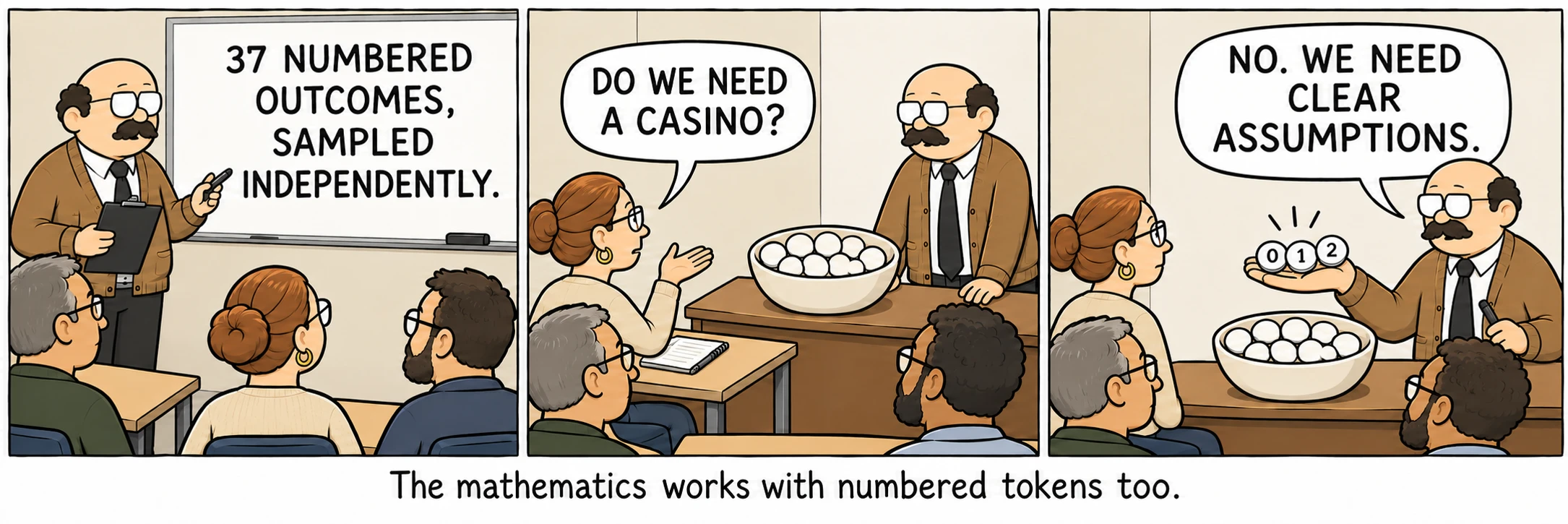
Siwenandrësseg Resultater, een Hausvirdeel, zwee Joerhonnerte Feeler, aus deenen ee léiere kann.
Quellen
- Feller, W. An Introduction to Probability Theory and Its Applications, Vol. 1.
- Ethier, S. N. The Doctrine of Chances: Probabilistic Aspects of Gambling.